Selected Projects
The projects below show how I approach scientific questions as products: define the decision, build a reproducible analytical core, make the result understandable, and create something that people can use.
IPF geometric target ranker
2026-08-16
Drug target identification for idiopathic pulmonary fibrosis (IPF)
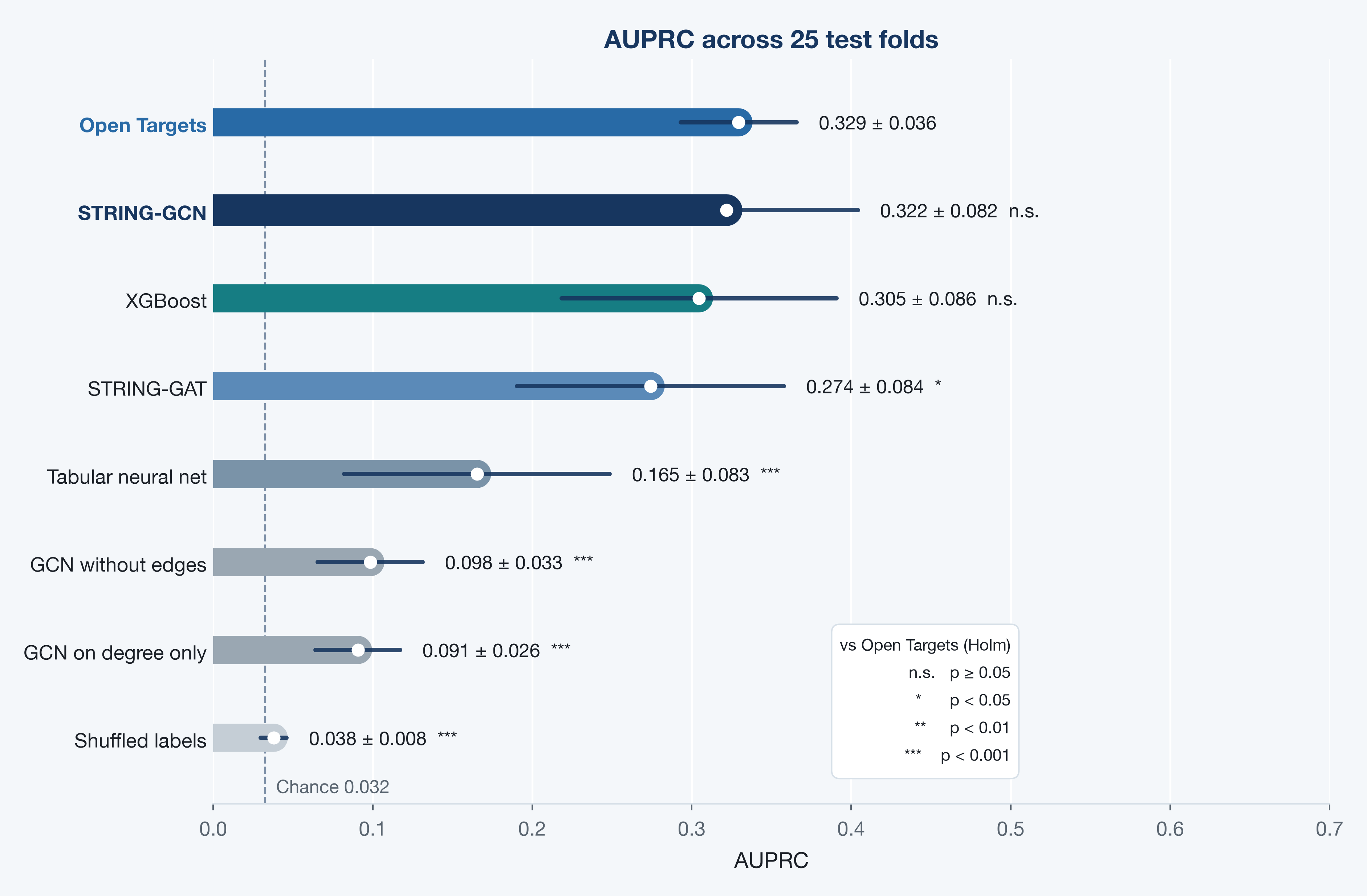
Pharma target identification ranks genes. I built a public PyTorch Geometric ranker for IPF: 4,283 Open Targets genes, 139 clinical-stage mechanisms as a proxy label, XGBoost versus a STRING GCN/GAT, with edgeless and permute-y controls.
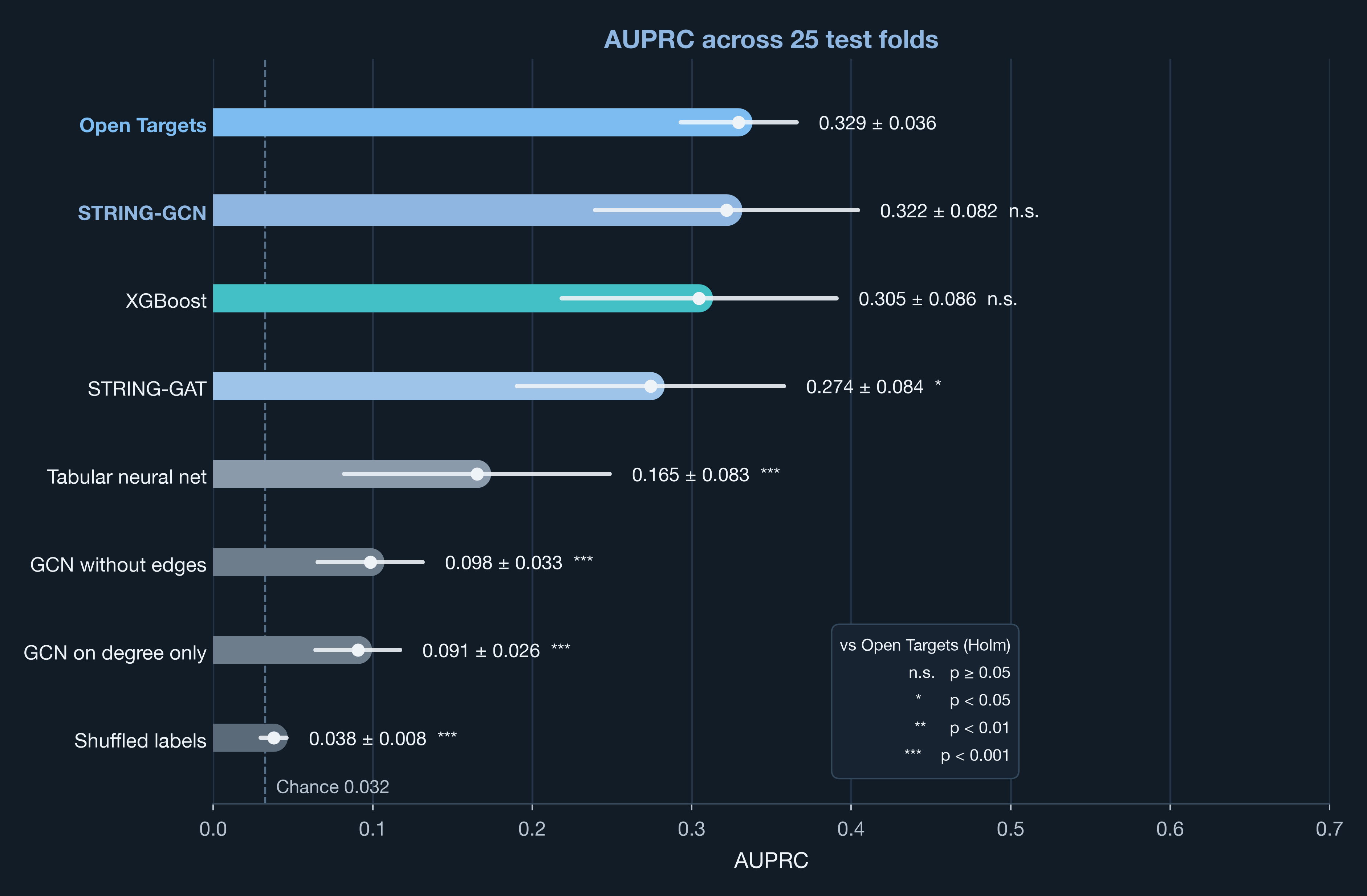
STRING-GCN recovers clinical mechanisms at AUPRC 0.32 (chance 0.03), beats an edgeless twin in 25/25 folds, and ties XGBoost.
Focus: PyTorch Geometric · gene ranking · leakage audit · AUPRC · STRING · IPF
3D Protein Explorer
2022-06
Connecting mass spectrometry with protein structure
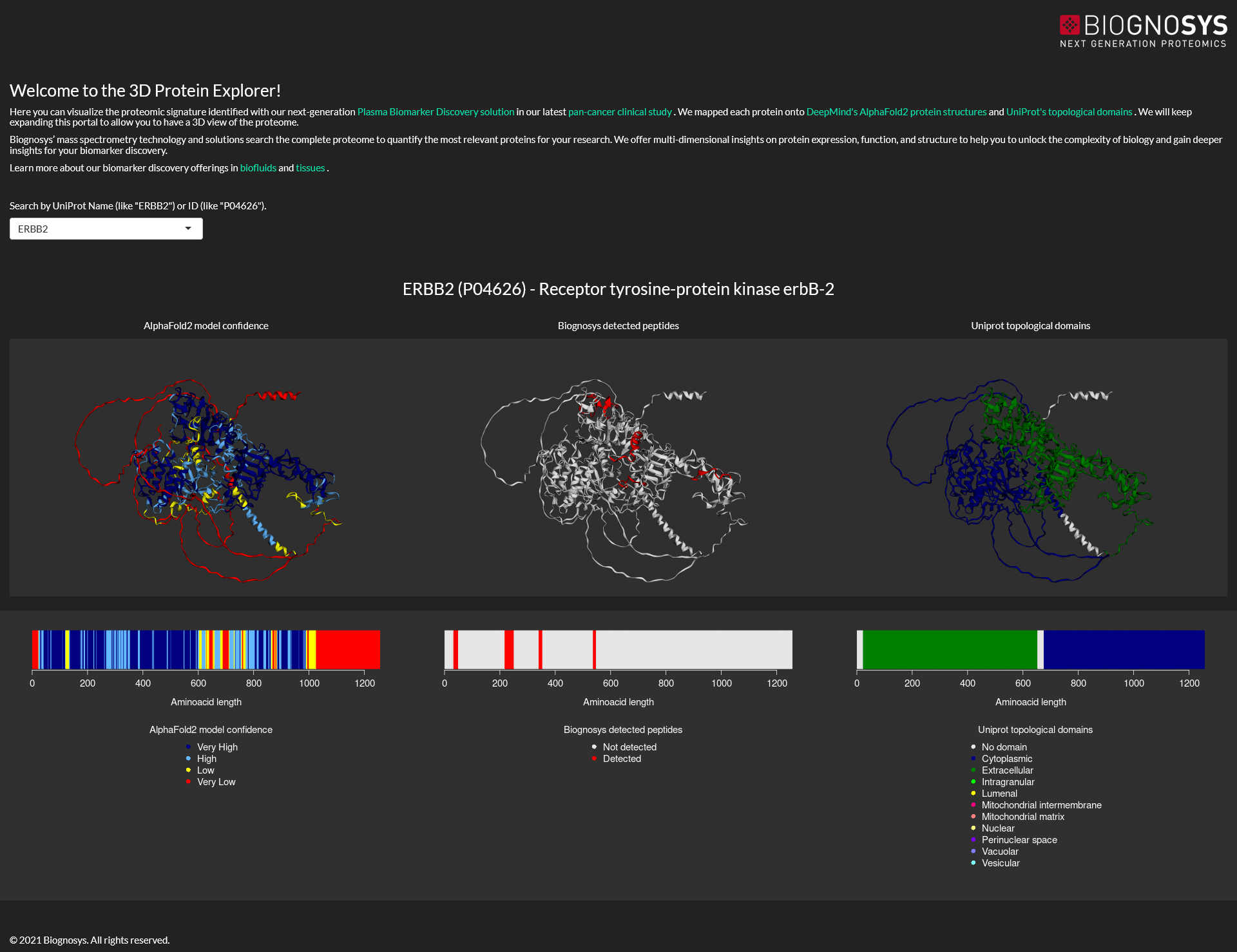
While working in R&D at Biognosys, I identified an opportunity to connect newly released AlphaFold structures with the company’s proteomics coverage. The resulting 3D Protein Explorer lets users select a protein and see which regions are observed by mass spectrometry.
I built the public Shiny application and designed a responsive data-loading approach that could search thousands of proteins without freezing the interface. The project was developed alongside my main work and involved collaboration with business and marketing teams to turn a technical capability into a customer-facing demonstration.
Focus: R · Shiny · proteomics · AlphaFold · scientific visualization · product collaboration
ExInAtor and ExInAtor2
2017–2023
Finding cancer-driver long non-coding RNAs
During my PhD, I developed ExInAtor, the first method designed specifically to identify long non-coding RNAs recurrently mutated in cancer. The work was published in Scientific Reports, where I was first author.
I later developed ExInAtor2, adding functional-impact evidence to mutation frequency and optimizing Python and R workflows to run millions of simulations efficiently. Experimental validation led by Roberta Esposito supported the predictions; the work was published in Nature Communications, where I was co-first author.
Focus: Python · R · cancer genomics · statistical simulation · high-performance computing · reproducible research


Evaluating binary classifiers beyond accuracy
2023-01-19
Choosing metrics that match biomedical decisions
Accuracy and precision can be misleading when classes are imbalanced or when the costs of false positives and false negatives differ. I explored these failure modes and compared alternative evaluation approaches for biomedical classification.
Read the article or inspect the reproducible code and examples on GitHub.
Focus: model evaluation · imbalanced classification · statistical reasoning · technical communication
Investment-diversification explorer
2023-02
Exploring concentration and diversification interactively
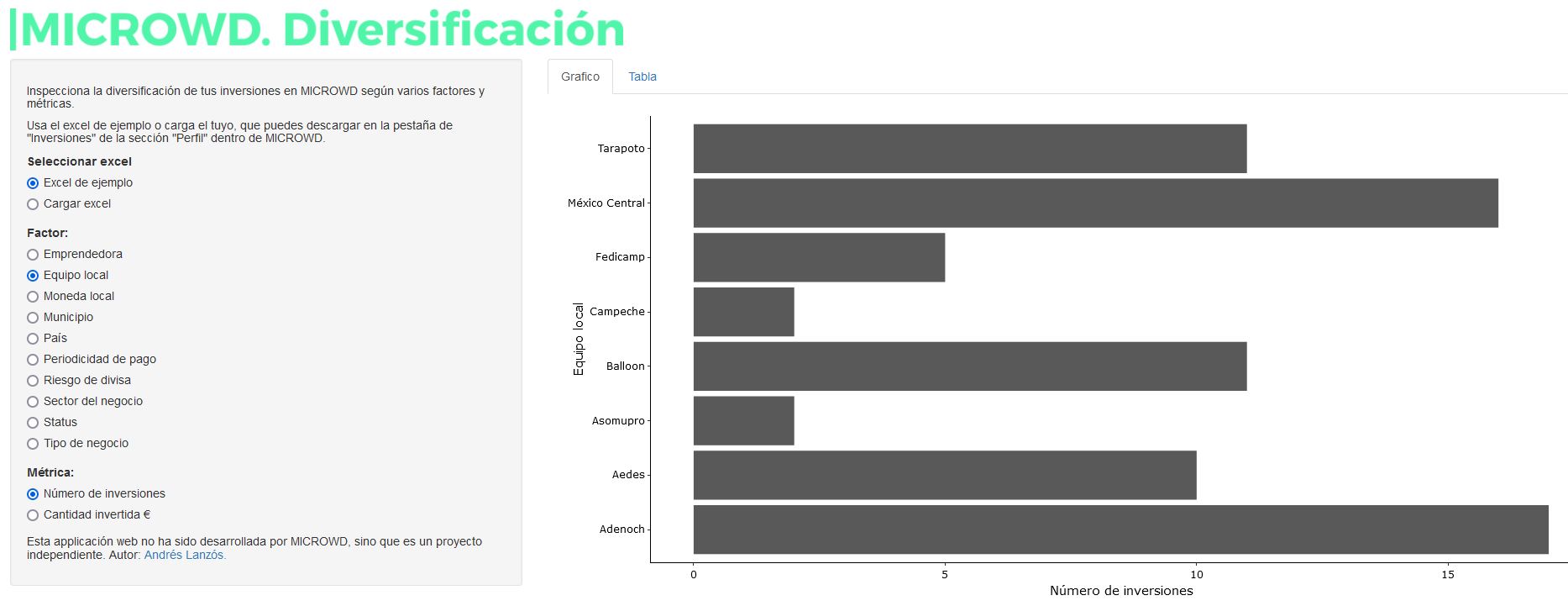
This Shiny application explores diversification across my investments in Microwd. It translates portfolio composition into an interactive view designed to support clearer reasoning about concentration.
The source code is available on GitHub.
Focus: R · Shiny · interactive analytics · financial data visualization