Elevated Alzheimer’s biomarkers do not mean the prevention window is closed
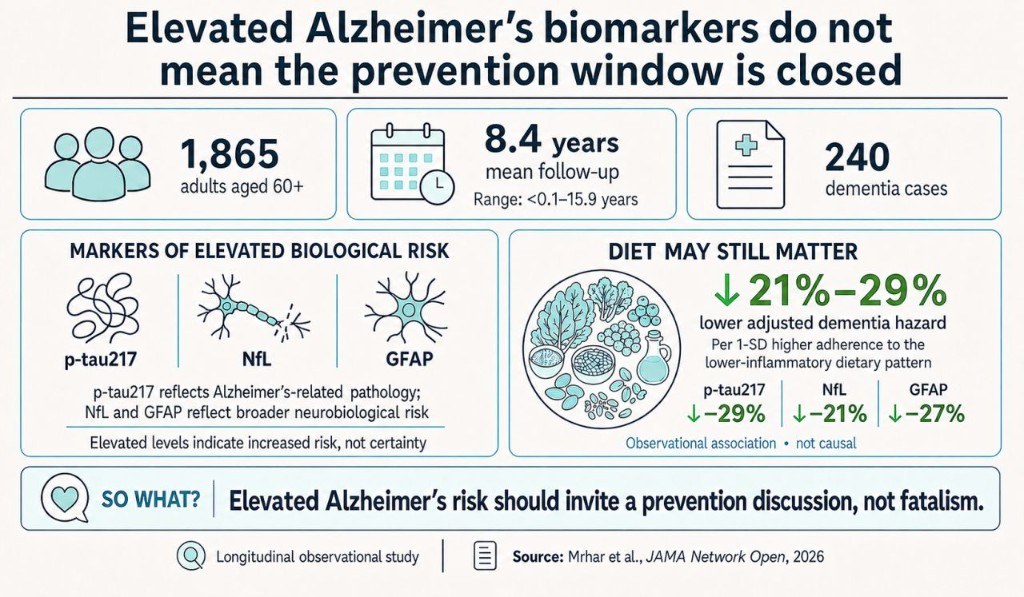
Elevated Alzheimer’s biomarkers do not mean the prevention window is closed.
A new longitudinal study suggests that diet quality may remain relevant even among older adults with elevated blood biomarkers linked to Alzheimer’s pathology and neurodegeneration. [1, 2]
Researchers followed 1,865 dementia-free adults aged 60+ in the Swedish National Study on Aging and Care in Kungsholmen. Mean age at baseline was 70.5 years. Mean follow-up was 8.4 years (range: <0.1-15.9), and 240 participants developed dementia. [1]
The biomarkers examined were:
- p-tau217: Alzheimer’s-related tau pathology
- NfL: neuronal injury
- GFAP: astrocyte activation or damage [1]
What did they find?
Across the full cohort, higher-quality dietary patterns were associated with lower dementia risk. [1, 2]
Among participants with elevated biomarkers, the lower-inflammatory dietary pattern showed the most consistent inverse associations. Per 1-SD higher adherence, adjusted dementia hazard was 29% lower with elevated p-tau217, 21% lower with elevated NfL and 27% lower with elevated GFAP. These were observational associations, not causal effects. [1]
The wider evidence is supportive but mixed
WHO’s 2026 guideline includes healthy diet within dementia-risk-reduction recommendations. [3]
A Mediterranean-diet trial reported more favourable changes in certain cognitive outcomes with extra-virgin olive oil or nuts than with a control diet. [4]
A larger three-year trial found no significantly greater cognitive improvement with the MIND diet than with a control diet involving mild calorie restriction. [5]
What the evidence supports
- A healthy, balanced diet is a guideline-supported component of dementia risk reduction.
- Diet may remain relevant after biological risk becomes visible.
What it does not prove
- Diet prevents Alzheimer’s dementia.
- Changing diet after biomarker elevation will prevent dementia.
- A lower-inflammatory diet reverses pathology or neutralises biological risk.
Earlier risk insight should open a structured prevention conversation, not fatalism or promises the evidence cannot support.