A biomarker of disease risk is not the same as an intervention target
A biomarker of disease risk is not the same as an intervention target.
Two cancer prevention trials make the point painfully clear [2, 6].
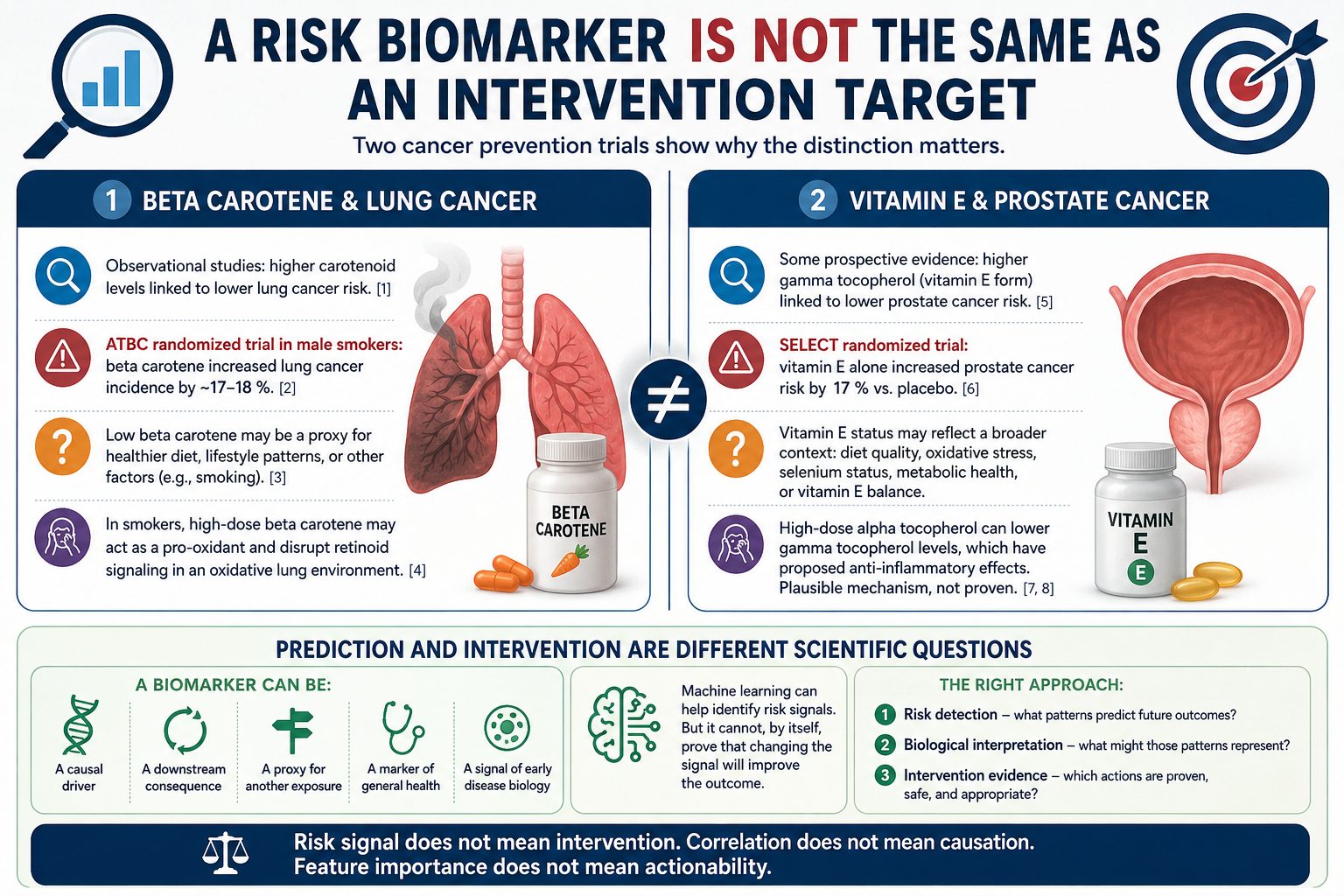
1. Beta carotene and lung cancer
Observational studies found that people with higher blood concentrations of several carotenoids and retinol often had lower lung cancer risk [1]. So, should people take supplements to reduce their risk?
That is what randomized supplementation trials tested. In ATBC, a large randomized trial in male smokers, beta carotene supplementation increased lung cancer incidence by about 17 to 18 percent [2].
One possible explanation is that low beta carotene was not the root cause. It may have been a proxy for a broader context, such as higher fruit and vegetable intake, healthier lifestyle patterns, or residual confounding by smoking [3].
In smokers, high dose beta carotene may also behave differently because cigarette smoke creates a highly oxidative lung environment. Proposed mechanisms include oxidative beta carotene metabolites, pro-oxidant effects, and altered retinoid signaling [4].
2. Vitamin E and prostate cancer
Some prospective evidence suggested that higher gamma tocopherol, one form of vitamin E, was associated with lower prostate cancer risk [5].
But SELECT, a large randomized placebo-controlled trial, found that men taking vitamin E alone had a statistically significant 17 percent relative increase in prostate cancer compared with placebo [6].
One possible explanation for the observational signal is that vitamin E status reflected a broader biological context, such as diet quality, oxidative stress, selenium status, metabolic health, or the balance between different vitamin E forms.
SELECT used high dose alpha tocopherol. Alpha tocopherol supplementation can reduce gamma tocopherol levels, and gamma tocopherol has proposed anti-inflammatory and anti-nitrosative effects [7, 8].
The better question
If a biomarker is a risk factor, the right question is not automatically:
“How do we push this biomarker up or down?”
The better question is:
“What does this biomarker represent, and is there independent evidence that acting on it is safe and beneficial?”
This is why at Idunox, I am very careful to separate these concepts for our customers:
- Risk detection: what patterns predict future outcomes?
- Biological interpretation: what might those patterns represent?
- Intervention evidence: which actions are proven, safe, and appropriate?
Risk signal does not mean intervention.
Correlation does not mean causation.
Feature importance does not mean actionability.
References
- Abar et al., Blood concentrations of carotenoids and retinol and lung cancer risk
- The ATBC Cancer Prevention Study Group, Vitamin E and beta carotene supplementation in male smokers
- Gallicchio et al., Carotenoids and the risk of developing lung cancer, systematic review
- Goralczyk, Beta carotene and lung cancer in smokers
- Huang et al., Prospective study of antioxidant micronutrients in blood and prostate cancer risk
- Klein et al., Vitamin E and prostate cancer risk, SELECT
- Huang et al., Alpha tocopherol supplementation reduces gamma and delta tocopherol in humans
- Jiang et al., Gamma tocopherol, the major form of vitamin E in the US diet, deserves more attention